













A batter faces a leg-spinner, anticipates the ball turning away from the bat & prepares a defensive shot. However, the ball turns in the opposite direction after pitching, leaving the batter struggling in order to adjust. Moreover, this is the deception behind a googly, one of the most effective variations in leg-spin bowling.
For cricket fans following match developments on 1xBet India, understanding bowling variations can simply provide a clearer perspective on player performance, tactical decisions & crucial moments during an innings. A googly is not simply about turning the ball; it is about using changes in spin direction to challenge a batter’s expectations. In this guide, we will cover the googly in cricket, its technique, rules, match examples, and much more.

What Is a Googly in Cricket?
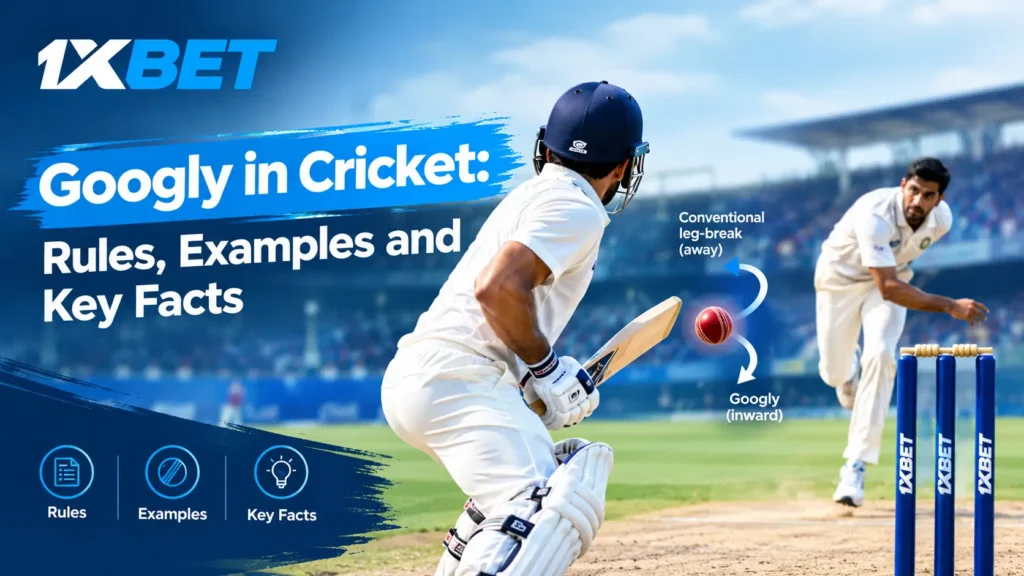
A googly is a variation of leg-spin bowling that turns in the opposite direction to a conventional leg-break. It is designed to deceive the batter by making the delivery appear similar to a regular leg-spinner’s ball while producing a different direction of turn after pitching.
For a right-handed batter, a conventional leg-break generally turns from leg to off, moving away from the batter. Moreover, a googly typically turns from off to leg, which moves towards the batter. Therefore, this unexpected movement can make it difficult to judge the line & choose the correct shot.
The effectiveness of a googly depends on disguise, accuracy & control. A skilled leg-spinner attempts in order to maintain a similar bowling action for both the googly & the conventional leg-break, making the variation harder to identify before release.
In addition, for viewers exploring cricket rules and bowling techniques through 1xBet India, recognising this difference is useful when following a spinner’s strategy & understanding how a single delivery can change the course of an over.
How Is It Different from a Leg-Break?
| FEATURE | GOOGLY | LEG-BREAK |
| Bowling style | Leg-spin variation | Conventional leg-spin delivery |
| Direction for a right-handed batter | Generally turns into the batter | Generally turns away from the batter |
| Primary objective | Surprise the batter with an unexpected turn | Challenge the batter with turn away from the bat |
| Tactical purpose | Exploit an incorrect reading of the delivery | Build pressure & even create scoring or dismissal opportunities |
A googly is particularly useful after a bowler has established a pattern with conventional leg-breaks. Once the batter begins anticipating the expected direction of spin, the bowler can even introduce the variation in order to disrupt that expectation.
However, the direction & amount of turn can vary with the bowler’s technique, the pitch surface & other playing conditions. The googly’s defining feature is its intended spin direction relative to the conventional leg-break, not the amount of turn it produces.
Read More: Yorker in Cricket: Rules, Technique and Examples
How Googly in Cricket Works: Grip, Wrist Position & Release
The googly relies on wrist-spin technique & a controlled release. Unlike a conventional leg-break, the bowler simply uses a different wrist & hand position in order to impart spin that produces the opposite direction of turn.
These are the main elements that are involved:
- Grip & finger placement: The bowler generally holds the ball in a way that supports wrist-spin bowling. Moreover, exact finger positions can even differ between bowlers, which depends on their technique & comfort.
- Wrist orientation: The wrist and hand work together in order to create the spin required for the googly. Likewise, developing this movement while maintaining control even requires consistent practice.
- Ball release: The bowler imparts the intended spin as the ball leaves the hand. Ideally, the overall action remains similar to that of a conventional leg-break, which makes the variation difficult in order to anticipate.
- Pitch interaction: After landing, the spinning ball interacts with the surface & may turn towards the batter instead of away from them.
Flight, speed & length also affect the outcome. Moreover, a well-disguised googly landing on a good length may force a batter in order to make a quick adjustment, particularly if they have already committed to playing for the expected turn.
The delivery requires more than wrist movement alone. In addition, Bowlers need to balance spin, accuracy & consistency to use the googly effectively without sacrificing control of their line and length.
Googly Bowling Rules: Is a Googly a Legal Delivery?
Yes, a googly is a legal delivery in cricket when it is bowled in accordance with the applicable Laws of Cricket & match playing conditions. It is a recognised variation of leg-spin bowling & turning the ball in an unexpected direction is not an infringement.
The bowler must still comply with the rules governing a legal delivery. For example, overstepping the popping crease can result in a no-ball, while an illegal bowling action may also lead to a no-ball under the applicable regulations.
Moreover, it is important in order to distinguish a legitimate variation in wrist-spin technique from an illegal bowling action. A googly is not automatically unlawful because the bowler changes wrist position or even produces a different direction of spin.
In addition, readers using 1xBet India to follow cricket matches can benefit from understanding this distinction, particularly when analysing umpire decisions & identifying the difference between bowling skill and an actual rules infringement.
When Do Bowlers Use a Googly in Cricket Matches?
Bowlers commonly use a googly to disrupt a batter’s expectations & create uncertainty about the direction of turn. It can be especially effective when a batter has faced several conventional leg-breaks & starts anticipating the same movement.
For example, a leg-spinner may bowl deliveries that turn away from a right-handed batter before introducing a googly that turns inward. If the batter plays for the expected turn, the ball may pass the outside or inside edge, depending on the line and shot attempted.
A googly can simply create opportunities for dismissals such as bowled & leg before wicket (LBW). It may even force a batter into a mistimed shot or an uncomfortable defensive position. However, the outcome depends on the delivery’s accuracy, the batter’s response & the match situation.
The variation is not equally effective against every opponent. In addition, experienced batters may identify changes in release, adjust their footwork, or even play with a straighter bat in order to reduce the risk of misjudging the spin.
Explore More: Bouncer in Cricket: Rules, Technique and Examples
Googly in Cricket: Examples & Key Signs to Watch
Consider a right-handed batter who faces a leg-spinner who has repeatedly bowled conventional leg-breaks. Moreover, expecting the next delivery to turn away, the batter moves forward & prepares a defensive stroke.
The bowler then delivers a googly that turns towards the batter after pitching. If the batter has misjudged the line or committed to the wrong shot, the ball may beat the bat & hit the stumps or even create another dismissal opportunity. Therefore, this hypothetical example demonstrates how a change in spin direction can gradually affect a batter’s decision-making.
When you watch a match, you need to simply consider these factors:
- Bowling action & release: You have to observe the bowler’s hand & wrist, while remembering that skilled bowlers try to disguise the variation.
- Flight & trajectory: The height, speed & path of the ball even influence how the batter judges its likely landing point.
- Turn after pitching: You should watch whether the ball simply moves towards or away from a right-handed batter.
- Footwork & shot selection: A late adjustment or a misjudged defensive stroke may indicate that the batter even struggled to read the delivery.
These signs can eventually help cricket fans understand bowling tactics & player performance. However, the delivery should not be identified solely from its outcome, because pitch conditions & other types of spin can also influence the ball’s movement.
How a Googly Affects Match Analysis & Player Performance
A googly can influence match analysis by giving a leg-spinner another way in order to challenge a batter. The variation may affect shot selection, footwork, scoring decisions & the pressure being created during an over.
Moreover, captains may even consider the batter’s strengths, the pitch conditions, & the bowler’s variations when they decide field placements. A googly may be used as a surprise delivery, but its timing depends on the broader match situation & the batter’s approach.
When you assess a spinner’s performance, you need to simply consider bowling figures, wickets taken, economy rate & the ability in order to maintain pressure across a spell. These statistics even provide more context than judging performance from one successful or unsuccessful delivery.
For cricket followers on 1xBet India, understanding the role of the googly can make match developments easier in order to interpret. In addition, it helps explain why a bowler might change their approach, how a batter responds to spin & why tactical variation matters in different formats of the game.
Conclusion
In the above blog, we have discussed that the googly is an important leg-spin variation that uses a change in spin direction in order to challenge a batter’s expectations. Moreover, its effectiveness generally depends on technique, disguise, accuracy & the ability in order to use it at the right moment. Through the cricket-related content, 1xBet India can help readers build a clearer understanding of the techniques, terminology, & statistics that shape the game.